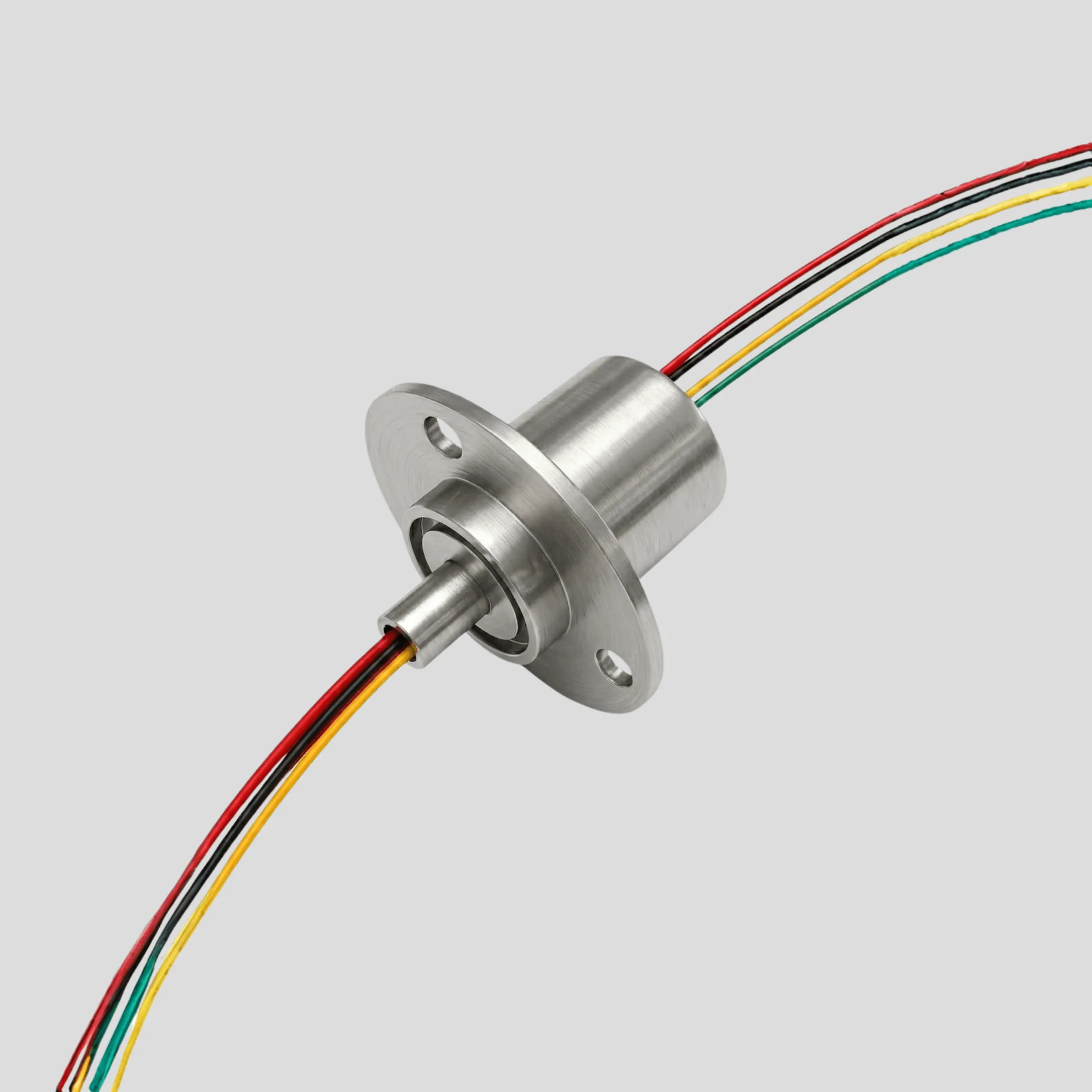
SRM Series
Miniature Slip Ring (SRM Series)
Extremely small size with low torque and low electrical noise. Ideal for fine instruments.
Features
- Extremely small size
- Low torque operation
- Low electrical noise
- Precision engineering
- Fine instrument compatibility
Applications
Need Customization?
We offer customized solutions for specific requirements.
Features
Technical Specifications
5 points- Continuous transmission of image, video, HD signal, control under 360° freely rotation.
- Low wear, maintenance-free, long lifetime
- Low torque, smooth rotation
- Electrical Noise ≤0.01 Ω
- Compact construction
OPTIONS
7 options- Number of Circuits
- Housing material
- Higher operating speed
- Cable length
- Connectors
- Special cables
- Operating temperature
Locked
Electrical & Mechanical Data
Add your email to unlock electrical data & mechanical data for Miniature Slip Ring (SRM Series).
We use your email only to follow up on this enquiry.
About Electrical Rotary Joints (Slip Rings)
Powering Continuous Rotation. Essential electromechanical devices that enable continuous, unrestricted rotation while maintaining secure and stable electrical connections.
A slip ring is an electrical connector designed to conduct current or data across a rotating interface, replacing the need for dangling wires that would inevitably twist and break.
Key components
- Rings
- Circular, conductive tracks (usually made of copper or a precious metal alloy) mounted on the rotor (the rotating part)
- Brushes
- Stationary, conductive contacts (often graphite, carbon fiber, or a precious metal alloy) that rest on the rings and transfer the electrical current or signal
- Housing/Stator
- The fixed enclosure that holds the brushes and provides the mounting points for the stationary side
Typical applications
- Packaging Machinery: Transmitting power and control signals to rotating sealing heads or label applicators
- Cranes & Winches: Providing power and control signals to the rotating drum or trolley
- Robotics & Automation: Enabling unlimited joint movement in multi-axis robots without damaging wiring
- Turrets & Indexing Tables: Supplying power and control for precision positioning systems
- Wind Turbines: Transmitting pitch-control signals and monitoring data from the rotating hub to the nacelle
- Medical Equipment (e.g., CT Scanners): Handling high-speed data transfer and power delivery during continuous rotation